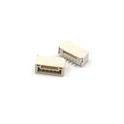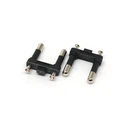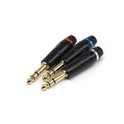

Aircraft plugs are special electrical connectors designed for use in the aviation and aerospace industry. Typically comprising a plug, a socket, a distribution box, and a protective cover, aircraft plugs facilitate circuit connection and disconnection. The plug's outer shell is usually made of high-quality metal material and boasts characteristics such as waterproofing, corrosion resistance, and shock resistance. Additionally, the contact surface between the plug and socket is made of special materials that exhibit exceptional performance in high temperature, high pressure and wear resistance, ensuring efficient and reliable circuit connection.
The advantages of aircraft plugs include their compact structure, waterproofing, corrosion resistance, shock resistance, and high-temperature and high-pressure resistance. As a result, they are widely used in high-end equipment and environments with limited space, as well as in humid and rainy conditions or applications with severe vibration and temperature fluctuations. Aircraft plugs are commonly used in the aviation and aerospace, defense, marine, automotive, and robotic industries, including missiles, satellites, airplanes, helicopters, military vehicles, marine exploration equipment, and robotics.
With the continuous development of high-end equipment manufacturing and research and development, aircraft plugs will become more extensively used in the future.