


Why Choose Us?
Rich Experience
Dongguan WS Electronic Technology Co., Ltd, is a professional manufacturer of OEM Connector and Cable Assembly with more than 18 years' experience.
Broad Market
The products are sold to all over the world: Europe, America, Middle East, Southeast, Africa and other countries and regions, it has been widely recognized and trusted by many customers.
Wide Product Range
Dongguan WS Electronic Technology Co., Ltd, Main products are DC Connectors, Earphone Connectors, Mobile Phone Charger connectors, Audio and Video Connector and Corresponding Cable Product. They are popular used in mobile phone, headset, car charger, LED light, electric toothbrush, beauty instrument, medical equipment.
Advanced Equipment
Company introduces first-class production equipment and testing equipment: high-speed precision automatic lathe and punching machine, original vertical injection molding machine, automatic assembly machine, high voltage tester, insertion force tester, salt spray tester, current load instrument, environmental tester, which is essential to ensure product quality, price, delivery time to meet customers' needs.
Definition of Audio Connector
Audio connectors are electrical or optical connectors for carrying audio or video signals. Audio interfaces or video interfaces define physical parameters and interpretation of signals. For digital audio and digital video, this can be thought of as defining the physical layer, data link layer, and most or all of the application layer. For analog audio and analog video these functions are all represented in a single signal specification like NTSC or the direct speaker-driving signal of analog audio.


Product Categories
Latest Products


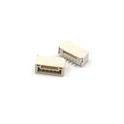
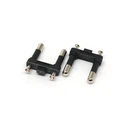
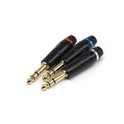

Benefits of Audio Connector
Audio connectors are convenient, versatile, and almost required for any gigging professional. They allow you to convert any cable with a certain connection type to another, meaning you don't have to just rely on cables with two correct ends.
Having one of every cable you could possibly need just isn't practical, and if you're a performer, chances are you are going to rely on a venue for some of your cabling. Maybe the venue only has audio connectors available, but you need a ¼ in connection.
What Is The Standard Size For An Audio Connector?
Audio connectors can come in a variety of sizes. More often, sizes are referring to the diameters of the metal pin on the connector.
The most common are the 2.5 mm (3/32 inch), 3.5 mm (1/8 inch), and 6.35 mm (1/4 inch). The 3.5 mm (1/8 inch) is considered the most universal size you will come across since it is practically used for all audio equipment and headphones.

Types of Audio Connectors
Audio connectors are electromechanical devices that link the audio cable with the output device. Connectors are classified with the kind of signal it transmits. To be regarded as a sound professional, it is pertinent to have in-depth knowledge about connectors to understand their various uses. Connectors are grouped as balanced and unbalanced connectors. The various kinds of connectors can both be used by different professional and individual consumers. These connectors come at different prices and different quality levels. The basic types of audio connectors are:
Analog audio connectors
An Analog audio connector is an output found on some home electronics such as DVD players and VCRs and is used to connect analog audio cables to receivers and TVs. The various types of analog audio connectors are:
1. RCA connectors: RCA connectors are unbalanced connectors that are used by a large number of professionals. Connectors are used for connecting home stereo systems, video cassette recorders, and so on. They are responsible for ten dB (consumer) line levels.
2. XLR connectors: Professionals predominantly use these connectors. There are three types of XLR connectors. They are XLR male, XLR female, and TRS. These XLR connectors have three contact points that transmit signals from the ground, positive and negative wires.
● XLR male: This is essential for connecting a variety of hardware inputs.
● XLR female: It is important for establishing a connection between a microphone and a variety of hardware inputs.
● TRS: This XLR connector connects both the input and output devices.
3. ¼ Audio connectors: These connectors are generally regarded as phone plugs. They are used to connect cables with various professional and consumer musical equipment such as speakers, musical instruments, amplifiers, and so many more.
Digital Audio Connectors
Digital Audio Connectors are more advanced than analog audio connectors. Nonetheless, analog connectors can transmit digital signals just like digital connectors. Some types of Digital Audio Connectors are:
1. S/PDIF: This is an acronym for Sony/ Philips Digital Interface Format. It is used for recorders, CD players, DVD players, MiniDisc equipment, consumer-level AES/EBU digital audio protocol, and audio interfaces.
2. AES/ EBU: This abbreviation means Audio Engineering Society/ European Broadcasting Union. They are used in a professional setup.
3. TOSLINK Optical and AdatLightpipe: It is the most frequently used digital connector that can transmit different digital signal formats. These formats are:
● S/PDIF
● AC-3 and DTS
● ADAT Lightpipe
There are varieties of audio connectors on the market. For best results, it is important to learn about audio cables and the connectors that work best.

Audio connectors are used to affix cables to other audio equipment, providing electronic signal transference and grounding protection. Applications for audio connectors can be general purpose, telephone, or microphone. Most audio connectors are for commercial purposes, but some may conform to military specifications.
Video connectors are electrical connectors used for carrying analog or digital data and video signals. They can be used on the end of a cable, as part of an electronics device, or with another device with a video input or output. Some video connectors carry video with a radio frequency (RF) signal and a coax, while others may use a multiconductor cable. Other types of video connectors may also carry audio in addition to video.
How to Store Audio Connectors?
It may be a little funny to get used to at first, but once you start wrapping your cables in this way it becomes very intuitive. As we mentioned before, the issue with the over-over cable wrapping method is that the cable is continually twisted along its length. The over-under method means as you are twisting with the “over”, you are untwisting with the "under". This will reduce the tension on the cable while wrapping and as it's stored, making it easier to uncoil and ultimately increasing the audio connector's longevity. You'll know you're doing it right when you can throw your cable and it uncoils without any snarls or kinks.
When storing your audio connectors, try to keep them either hanging or laying in a relaxed position as much as possible. Cable ties come in very handy for keeping your cables neatly organized and separated, especially if you have them in a pile or gig bag. If you've had cables stored for a while that you don't frequently use and don't know whether they still work or not (because you certainly don't want to test them at a gig), it's also helpful to invest in a cable tester. This allows you to test each connection point on your cables and make sure everything is in working order before putting them into commission.
Choosing the Right Audio Connector
Current Rating
The stated amps-per-circuit rating is the maximum amount of current that can pass through a mated connection without giving rise to a significant level of temperature rise. The current rating decreases as the number or density of circuits increases and also depending on the gage of the wire and mounting technique.
Connector Size
As the trend for downsizing peripherals and equipment continues, electronic connector size continues to be an important factor. Different formats of connector offer different circuit densities, although as noted above this can affect the current rating. The arrangement of the circuits can also impact upon space efficiency depending on your design with the option to arrange circuits in a single or dual-row. Pitch is a measure of the spacing between the circuits and is measured from the centre of the circuit contact pin to the centre of the adjacent contact pin.
Engagement Force and Locking
In high-vibration environments, such as cars, connectors with a positive locking mechanism may be preferential to avoid accidental disconnection. Although a positive lock also requires some form of unlocking action, such as 'ears' on the side of the connector plug to enable disengagement from the panel cut out. The engagement force for a connector is the amount of force required for each circuit multiplied by the number of circuits. The more circuits in a connector, the harder it will be to make the mating connection between the male and female elements.
Configuration
Connectors are available in numerous mounting configurations.
Materials and Construction
The construction relates to the materials the housing and contact pin are made of.
Mating Cycles
The softness of the tin coating on power connector contact pins can lead to damage over time. As a result, power connectors are rated for 'mating-cycles' the number of times the connection can be made and disconnected before performance is affected.
Our Factory
Dongguan WS Electronic Technology Co., Ltd, Main products are DC Connectors, Earphone Connectors, Mobile Phone Charger connectors, Audio and Video Connector and Corresponding Cable Product. They are popular used in mobile phone, headset, car charger, LED light, electric toothbrush, beauty instrument, medical equipment. The products are sold to all over the world: Europe, America, Middle East, Southeast, Africa and other countries and regions, it has been widely recognized and trusted by many customers.
Company introduces first-class production equipment and testing equipment: high-speed precision automatic lathe and punching machine, original vertical injection molding machine, automatic assembly machine, high voltage tester, insertion force tester, salt spray tester, current load instrument, environmental tester, which is essential to ensure product quality, price, delivery time to meet customers' needs.

Ultimate FAQ Guide to Audio Connector
As one of the leading audio connector manufacturers and suppliers in China, we warmly welcome you to wholesale high-grade audio connector made in China here from our factory. All customized products are with high quality and low price. For free sample, contact us now.
Usb 2 0 Portable Hard Disk Cable