


Why Choose Us?
Rich Experience
Dongguan WS Electronic Technology Co., Ltd, is a professional manufacturer of OEM Connector and Cable Assembly with more than 18 years' experience.
Broad Market
The products are sold to all over the world: Europe, America, Middle East, Southeast, Africa and other countries and regions, it has been widely recognized and trusted by many customers.
Wide Product Range
Dongguan WS Electronic Technology Co., Ltd, Main products are DC Connectors, Earphone Connectors, Mobile Phone Charger connectors, Audio and Video Connector and Corresponding Cable Product. They are popular used in mobile phone, headset, car charger, LED light, electric toothbrush, beauty instrument, medical equipment.
Advanced Equipment
Company introduces first-class production equipment and testing equipment: high-speed precision automatic lathe and punching machine, original vertical injection molding machine, automatic assembly machine, high voltage tester, insertion force tester, salt spray tester, current load instrument, environmental tester, which is essential to ensure product quality, price, delivery time to meet customers' needs.
Definition of DC Power Cable
DC Power Cable uses two poles – Negative and positive, and therefore the construction of these cables (DC) is less complex. This makes the manufacturing process comparatively simple, which lessens the cost of the finished product. Unlike DC, an AC cable has 3-phase, four or five-wire systems. This makes it more costly to insulate during the manufacturing process.
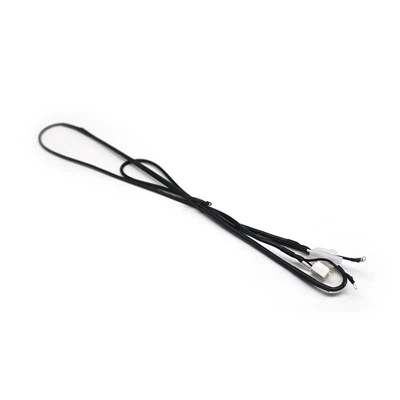
$ 1.30
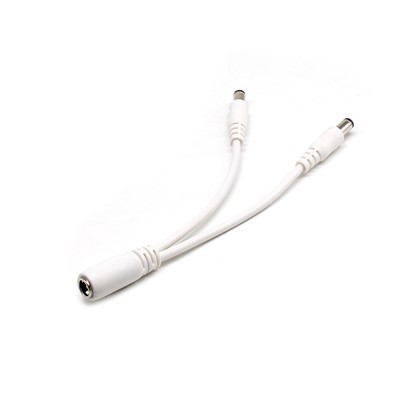
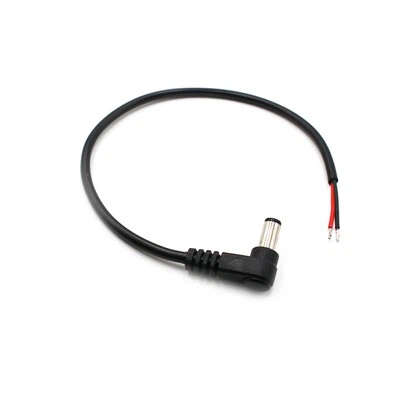
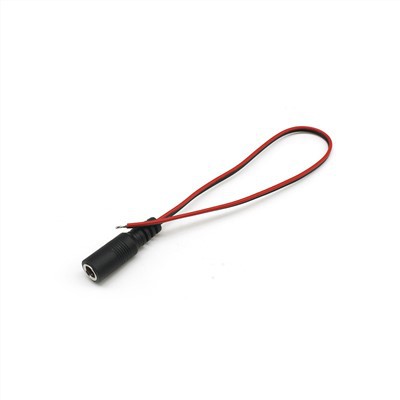


Product Categories
Latest Products



DC power cable has many advantages over AC power, which makes it ideal for various applications such as data centers, telecommunication facilities including cell sites, hospitals, airports, railway stations, and industrial facilities. DC power is becoming increasingly popular due to the rise of renewable energy sources, electric vehicles, and telecommunication devices. Here are some advantages of DC power cable:
Reliability
The use of DC power in telecom systems helps reduce power outage risks and increases network reliability.
Efficiency
DC power is more efficient than AC power because it does not waste energy in the form of heat. This makes it ideal for high-power applications such as data centers, electric vehicles, or heavy machinery.
Stability
DC power provides stable and predictable voltages, which is crucial for sensitive equipment such as microprocessors and machine drives.
Scalability
DC power can be easily scaled up or down to meet the specific needs of a particular application. This makes it suitable for both large-scale and small-scale projects.
Energy Storage
DC power can be stored for future use in its current form directly into back up batteries without the need for any type of conversion which makes it an ideal source of power for critical applications that require uninterruptable power like cell sites and data centers, as well as off-grid systems like solar panels and wind turbines. DC power is also becoming increasingly popular in electric vehicles as it enables faster charging times, greater efficiency, and longer battery life.
What Can DC Power Cable Do for Your Building?
With the number of DC-powered devices loading up building systems, the potential benefits, use cases, and ROI for DC power cable distribution across various environments.
Most transmission lines distribute high-voltage AC power, but with technological advancements, hundreds of transmission systems worldwide are now transmitting high-voltage DC power (HVDC)4. These lines have lower power losses — 2 to 3% in HVDC lines as compared to 10% in AC power transmission5. Still, HVDC transmission systems have room for improvement because their grids must convert the power at rectifier stations from DC to AC for distribution to buildings. That is, although DC power is being transmitted over long distances, our DC-powered devices are still receiving and converting AC power — unless their buildings distribute DC power locally.
DC power can be distributed locally throughout a building in several ways. Power over Ethernet (PoE) is one approach. Another involves the installation of a centralized AC-to-DC converter at a building's electrical panel, eliminating the need for individual conversions at the load level.
How to Use DC Power Cable Safely?
Regardless of the current you're working with, it's crucial that you work safely with electricity. The best ways to achieve this is by practicing the following:
Use insulated rubber gloves and tools
One of the simplest ways to minimise injuries from electrical shock is to wear insulated rubber gloves when working with electrical circuits. This adherence to insulated equipment should also be applied to any tools you are working with.
Discard damaged equipment
Damaged electrical plugs and power cords represent a real risk to your safety. Therefore, any damaged electrical equipment such as this should be safely disconnected from electrical supplies and discarded.
Minimise contact with water
If you get water on your hands, then the conductivity of electrical current will rise due to the reduced electrical resistance of your skin. Accordingly, you should always remove liquids from the vicinity of any electrical equipment.
Never work on energised equipment
One of the most dangerous things you can do is to work on electrical equipment with a live power supply. Instead, make sure that all equipment is fully de-energised by disconnecting it before attempting to work on it.
Using BOTH AC and DC, each where most appropriate, makes a better working and less costly power system. DC power cable is better suited for those few items that need a little power available all the time. Motion sensing outdoor lights, cord-less phones and message machines, alarm system, clock-radio and a doorbell are good examples. Turning those appliances off at night and when the house is vacant to save power just defeats their purpose.
Inverters, can use anywhere between 10 and 60 watts in standby, even when no AC power is consumed in the home. To avoid this waste, most quality inverters can automatically shut down to "sleep" or "search" condition, using near zero battery current and ceasing to generate AC power whenever no AC appliances are used. They restart themselves automatically when any light or appliance is switched on. But if a phone message machine or clock-radio continuously uses a few watts, the inverter can never shut down and 20 to 60 watts is continuously consumed in addition to the few watts of radio or message machine power. Other appliances, like motion sensing outdoor light switches and garage door openers, when AC is off, will not be able to restart an inverter and may thereby be inoperative some of the time.
The simplest solution might be to leave the inverter locked full-on all the time, producing AC power to the home 24/7 just like a utility company. To keep the inverter on 10 extra hours at night costs 1/3 to 2/3 kilowatt hour per night, enough to power a small freezer. A good hydropower system, and larger solar power systems with unlimited sunshine and strong cash budget for extra solar modules and batteries can do that. For the rest of us, its not a good idea, especially in climates where a generator needs to supplement the battery charge in winter months.
Common Devices that Use a DC Power Cable
Electric Vehicles
DC-DC power cables are commonly used in electric vehicles to charge the vehicle's battery. DC power cables can charge the battery much faster than AC chargers, making them suitable for quick charging stations.
01
Portable Electronics
Many portable electronic devices, such as smartphones, tablets, and laptops, use DC to DC power cables. These chargers are compact and lightweight, making them easy to carry and use on the go.
02
Power Tools
DC power cables are often used in power tools, such as drills, saws, and sanders. They provide a reliable and efficient power source for these tools, ensuring they perform well during use.
03
Medical Devices
Some medical devices, such as defibrillators and infusion pumps, may use DC-DC power cables. This is because they require a constant and reliable power source to ensure they function properly in emergency situations.
04
Consumer Electronics
Other consumer electronics products, such as GPS devices, digital cameras, and audio players, may also use DC power cables. These chargers provide a convenient way to power these devices when traveling or outdoors.
05
There are two kinds of 'fuels' that can be used in electric cars. They're called alternating current (AC) and direct current (DC) power. The power that comes from the grid is always AC. However, batteries, like the one in your EV, can only store power as DC. That's why most electronic devices have a converter built into the plug. You may not realize it but every time you're charging a device such as your smartphone, the plug is actually converting AC power to DC.
AC power cable for electric vehicles
When it comes to electric vehicles, the converter is built inside the car. It's called the "onboard charger" though it really is a converter. It converts power from AC to DC and then feeds it into the car's battery. This is the most common charging method for electric vehicles today and most chargers use AC power.
DC power cable for electric vehicles
Power from the grid is always AC. The difference between AC charging and DC charging is the location where the AC power gets converted; inside or outside the car. Unlike AC chargers, a DC charger has the converter inside the charger itself. That means it can feed power directly to the car's battery and doesn't need the onboard charger to convert it. DC chargers are bigger, faster, and an exciting breakthrough when it comes to EVs.

Selecting the Right DC Power Cable Material
Solar DC power cables can be made of various materials, each with its own set of advantages and disadvantages. The most common materials used in solar DC power cables include:
Copper
Copper is the most widely used material for solar DC cables due to its excellent conductivity and durability. However, it is also one of the most expensive materials and can be prone to corrosion and theft.
Aluminum
Aluminum is a cheaper alternative to copper and is also lightweight. However, it is not as conductive as copper and may require a larger cable size to achieve the same performance. See more companions between Copper and Aluminum
Tinned copper
Tinned copper is copper wire that has been coated with a layer of tin. This coating provides better protection against corrosion and is often used in marine and coastal environments.
Silver-plated copper
Silver-plated copper is copper wire that has been coated with a layer of silver. This coating improves the conductivity of the wire and can help reduce the resistance in the cable. However, it is also more expensive than copper or aluminum.
Stainless steel
Stainless steel is a durable and corrosion-resistant material that can be used in harsh environments. However, it is not as conductive as copper and may require a larger cable size to achieve the same performance.
Our Factory
Dongguan WS Electronic Technology Co., Ltd, Main products are DC Connectors, Earphone Connectors, Mobile Phone Charger connectors, Audio and Video Connector and Corresponding Cable Product. They are popular used in mobile phone, headset, car charger, LED light, electric toothbrush, beauty instrument, medical equipment. The products are sold to all over the world: Europe, America, Middle East, Southeast, Africa and other countries and regions, it has been widely recognized and trusted by many customers.
Company introduces first-class production equipment and testing equipment: high-speed precision automatic lathe and punching machine, original vertical injection molding machine, automatic assembly machine, high voltage tester, insertion force tester, salt spray tester, current load instrument, environmental tester, which is essential to ensure product quality, price, delivery time to meet customers' needs.

Ultimate FAQ Guide to DC Power Cable
As one of the leading dc power cable manufacturers and suppliers in China, we warmly welcome you to wholesale high-grade dc power cable made in China here from our factory. All customized products are with high quality and low price. For free sample, contact us now.
Crocodile Wire Cable Flexible Copper Power Cable