
Introduction to RS485 interface:
In order to expand the scope of application, the American Electronics Industry Association (EIA) formulated the RS-485 standard on the basis of RS-422 in 1983, adding multi-point, two-way communication capabilities, that is, allowing multiple transmitters to be connected to the same bus. , while increasing the driving capability and collision protection characteristics of the transmitter, expanding the common mode range of the bus, and later named the TIA/EIA-485-A standard.
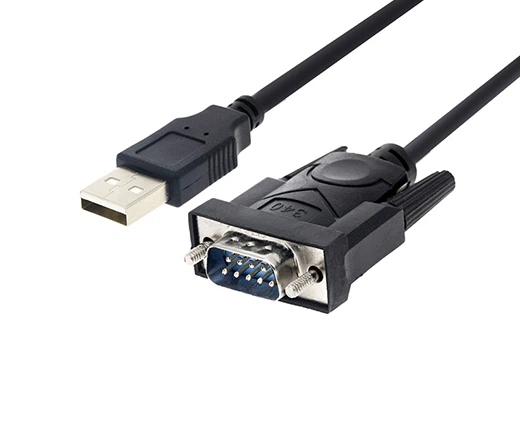
The half-duplex network composed of RS485 interface is generally a two-wire system (there was a four-wire connection method in the past, which can only realize point-to-point communication, which is rarely used now), and shielded twisted pair transmission is mostly used. This wiring method is a bus-type topology, and a maximum of 32 nodes can be connected on the same bus. In the RS485 communication network, the master-slave communication mode is generally adopted, that is, one master has multiple slaves. In many cases, when connecting the RS-485 communication link, simply connect the "A" and "B" ends of each interface with a pair of twisted pairs. The RS485 interface connector adopts DB-9 9-pin plug socket, the RS485 interface with the intelligent terminal adopts DB-9 (hole), and the keyboard interface RS485 connected with the keyboard adopts DB-9 (pin).