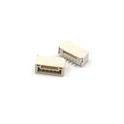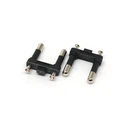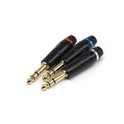

Although there are many kinds of Connectors, their production process is the same, and there is no difference. In general, the manufacturing process of connectors can be divided into these four steps:
1. Injection molding.
The plastic box seat of the connector joint is made during the injection molding process. The general treatment method is to inject the melted plastic into the metal film and cool it quickly. "Leakage" occurs when the molten plastic is not completely filled with the fetal membrane; This is a typical defect in the injection molding process. Other disadvantages include inflated or partially blocked connectors (after z-assembly, these sockets must be kept clean and smooth in order to connect the plug correctly with the plug). Using backlight technology, it is easy to identify whether there is leakage or blockage in the box. Therefore, the computer vision system for quality inspection after injection molding is relatively simple.
2. Coating.
After stamping, the plug should be put into the coating. At this stage, the electronic contact surface of the connector will be covered by different metal coatings. A problem similar to the stamping process, such as the distortion, fracture or deformation of the needle, can also be entered into the electroplating device by the punching needle. Using the technology described in this paper, such quality defects can be easily found. However, in the view of most computer vision system manufacturers, the quality problems of many products are "forbidden areas". The manufacturer of the connector expects that the system can detect all kinds of inconsistent defects on the coating of the connector plug, such as small scratches and pinholes. Although this defect can easily identify other products (such as the bottom of aluminum cans or other flat surfaces); However, because most of the joints are irregular and angular surfaces, it is difficult for visual detection system to effectively identify such tiny defects.
3. Punching.
When producing connectors, it usually starts with a punch. The connector (plug) is stamped with a thin metal strip. One end of the large roll of metal strip enters the punch head, and the other end is wound on the disc by the oil pressure platform of the press, so that it can extract the metal strip from the disc and roll up the finished product.
4. Assembly.
In the production of connectors, the latter stage is the final assembly. There are two ways to connect the tinned plug with the base of the syringe box: independent or composite. Independent plug means one plug at a time; Insert multiple plugs into one composite plug at a time. No matter what type of plug is used, check whether all plugs have leakage and are in the correct position during assembly; Another traditional test task is to measure the distance between mating surfaces of joints.